RFK Jr.’s “Wellness Farms” Idea and the Italian Model Behind It
Robert F. Kennedy Jr.’s past remarks about sending struggling children and people with addiction issues to “wellness farms” returned to the spotlight after a tense Senate hearing raised questions about his plans for addiction treatment in America.
The discussion intensified after lawmakers revisited comments Kennedy made during his 2024 presidential campaign, where he described “reparenting” young people in rural recovery communities modeled after an Italian rehabilitation center called San Patrignano.
The issue drew national attention when Sen. Angela Alsobrooks confronted Kennedy during a Senate hearing. Alsobrooks referenced his earlier comments about Black children and wellness farms, calling the idea “dangerous” and “irresponsible.” Kennedy appeared surprised by the accusation and responded that he did not remember making the statement. He later added, “If I said it, I apologize.”
Yet recordings from podcast interviews in 2024 show Kennedy discussing the concept repeatedly and in detail.
Kennedy’s Vision for Rural Communities
During multiple podcast appearances while campaigning for president, Kennedy outlined a proposal centered on wellness farms located in rural American communities. These programs, according to Kennedy, would focus on addiction recovery, emotional healing, discipline, work, and community living.
In one interview, Kennedy argued that many children had been harmed by what he described as excessive prescriptions of medications for anxiety, depression, and behavioral conditions. He also made the false claim that Black children are routinely prescribed medications such as Adderall, SSRIs, and benzodiazepines in ways that “induce violence.”
After making that claim, Kennedy proposed wellness communities as an alternative.
“Those kids are going to have a chance to go somewhere and get reparented and live in a community,” he said.
The Department of Health and Human Services later stated that Kennedy used the word “reparenting” in a psychological context related to emotional healing and mental health support. According to the agency, his remarks were taken out of context.
Still, Kennedy repeatedly connected the idea to a real-world rehabilitation model in Italy that he admired: San Patrignano.
Italian Recovery Center Behind Proposal

Instagram | co_movementhq | Founded in 1978 near Florence, San Patrignano is a massive, communal-living addiction recovery center.
Located near Coriano, about two hours east of Florence, San Patrignano is one of Europe’s largest residential addiction recovery communities. Founded in 1978 during Italy’s heroin crisis, the organization combines abstinence, work programs, and communal living.
Kennedy described the community as a “beautiful model” during campaign events and media appearances. At one town hall event on NewsNation in 2024, he praised the center by saying:
“I’ve seen this beautiful model that they have in Italy called San Patrignano where there are 2,000 kids who work on a large farm and a healing center. That’s what we need to build here.”
The actual numbers are far smaller. San Patrignano currently houses around 850 residents, most of them adults recovering from addiction.
The community includes workshops, dormitories, vineyards, schools, farms, kitchens, and training centers spread across roughly 700 acres. Residents often stay for several years while following strict schedules built around work and personal responsibility.
Matteo Diotalevi, who has worked at San Patrignano for 15 years, described the center as a place where people “find another chance.”
Morning routines begin early. Residents work in farming, textile production, animal care, cooking, or maintenance. The philosophy behind the system is direct: structure, labor, accountability, and complete abstinence from drugs and alcohol.
Inside Daily Life at San Patrignano
Many residents describe the environment as supportive despite its rigid structure.
Twenty-eight-year-old Liliana Moretti, who split time between California and Italy before entering the program, explained how unresolved trauma contributed to her addiction struggles.
“I had scars that had never healed or healed not well,” she said. “I patched up things with alcohol, with cocaine and with food mostly.”
Unlike many addiction treatment programs in the United States, San Patrignano does not rely heavily on traditional psychotherapy or medication-assisted treatment. Instead, recovery centers around peer support, work, and communal responsibility.
“This place has humanity, it has compassion,” Moretti said. “It has things that help you see hope in yourself and in others.”
Kennedy has often linked his own recovery journey to similar values. The Health Secretary has openly discussed his past heroin addiction, which lasted more than a decade beginning in his teenage years. He has credited faith, structure, and service with helping him recover.
Critics Question the Science Behind the Model
Despite praise from some residents and supporters, addiction researchers and public health experts have raised major concerns about Kennedy’s interest in replicating the San Patrignano model across the United States.
One of the biggest criticisms centers on the community’s rejection of medication-assisted treatment, including methadone and buprenorphine. These medications are widely considered the standard treatment for opioid addiction by health agencies in both the U.S. and Europe.
Monica Barzanti, a spokesperson for San Patrignano, defended the center’s approach.
“No drugs can cure drugs,” Barzanti said. “You have to rebuild your own biography.”
That position sharply conflicts with mainstream addiction science.
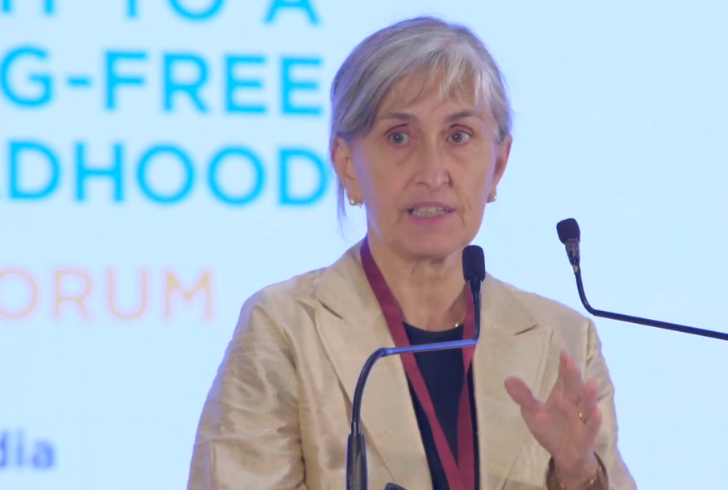
YouTube | FourthWaveFoundation | “No drugs can cure drugs,” stated Barzanti, advocating for San Patrignano’s life-rebuilding approach.
Dr. Robert Heimer from Yale University’s School of Public Health criticized abstinence-only recovery systems, arguing that they repeatedly fail people struggling with opioid addiction.
“We know that abstinence-based programs fail over and over, often very quickly,” Heimer said.
Researchers warn that opioid addiction operates differently from alcohol or cocaine dependency because relapse after detox can quickly become fatal. Once tolerance drops, a person returning to fentanyl or heroin faces a far higher risk of overdose.
“The treatment is worse than the disease,” Heimer said.
The concern carries added weight in the United States, where fentanyl-related deaths continue to devastate communities nationwide. According to data from the Centers for Disease Control and Prevention, opioids kill tens of thousands of Americans every year.
A History of Controversy at San Patrignano
Kennedy’s praise for San Patrignano has also revived discussion about the community’s troubled history.
The rehabilitation center faced major scandals during the 1980s and 1990s. According to San Patrignano medical director Dr. Antonio Boschini, several residents were once held against their will after attempting to leave the program.
“Like jail, that’s against the law,” Boschini said.
The organization’s founder, Vincenzo Muccioli, later became one of Italy’s most controversial public figures. Muccioli was convicted of helping cover up the murder of a former resident who had fled the facility. He died in 1995 while appealing the case.
Those events were later revisited in the 2020 Netflix documentary series “SanPa: Sins of the Savior,” which examined the rise and controversy surrounding the recovery community.
Current leaders at San Patrignano acknowledge the organization’s past mistakes and say reforms have reshaped the program over the years.
“There were two people who committed suicide and this is something that continued to shade our program,” Barzanti said. “Nowadays we have recognized our mistake.”
Dr. Boschini also expressed skepticism about Kennedy’s proposal to scale the model nationally across the United States.
“You cannot have another San Patrignano,” he explained, noting that past expansion efforts created serious operational and ethical problems. “There were too many people, out of control.”
Kennedy’s Connection to the Facility
Another issue drawing attention is Kennedy’s actual relationship with the Italian community.
While Kennedy has repeatedly cited San Patrignano as inspiration for his recovery proposals, NPR reporters were unable to confirm whether he had ever visited the facility or consulted with its leadership before publicly promoting it.
Barzanti stated that she had no record of communication with Kennedy or officials from the Department of Health and Human Services.
“I read the interview because someone forwarded it to me,” she said. “It is the only thing I know about this project.”
That revelation surprised some addiction policy experts who expected more direct collaboration before such a large-scale proposal was discussed publicly.
Mixed Signals on Medication-Assisted Treatment
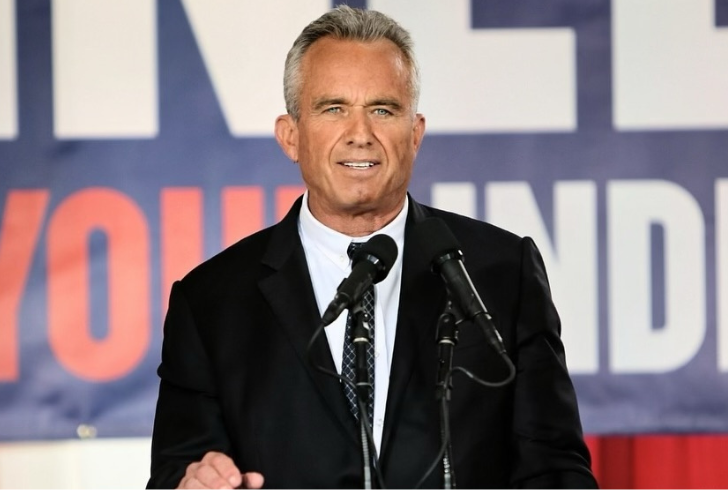
Instagram | robertfkennedyjr | Kennedy’s views on addiction medication have fluctuated between pragmatic acceptance and pharmaceutical distrust.
Kennedy’s public comments about addiction medication have varied significantly over time.
At certain points, he has described medications like methadone as “practical and pragmatic” tools when paired with spiritual support and recovery programs.
At other times, he has expressed distrust toward pharmaceutical treatment methods entirely.
“I’m a person who would never tell you the answer is a drug,” Kennedy said during a 2024 interview. “You never can fix what’s wrong inside of you with something outside of you, with a substance, a powder, a potion or a pill.”
That philosophy contrasts sharply with recommendations from agencies such as the CDC, which support expanded access to medication-assisted treatment as one of the most effective ways to reduce overdose deaths.
In February 2026, Kennedy introduced the “Great American Recovery Initiative,” a federal addiction recovery effort that heavily emphasized faith-based recovery, community support, and abstinence-focused treatment.
During the announcement, Kennedy framed addiction recovery as both a public health issue and a spiritual crisis.
“That’s how you precipitate a spiritual revitalization, a spiritual renaissance,” he said. “By reaching out to addicts on the street, giving them stable lives.”
Why the Debate Continues
The controversy surrounding wellness farms reflects a larger national divide over addiction treatment in America.
Supporters of abstinence-centered recovery programs argue that structure, accountability, work, and community can help people rebuild damaged lives. Critics counter that rejecting proven medications creates dangerous risks, especially during the fentanyl crisis.
Kennedy’s comments about “reparenting” children added another layer to the debate because they touched on race, mental health, and government involvement in family life. His statements also raised concerns about how large-scale recovery communities would operate and whether vulnerable people could face coercive treatment conditions.
At the center of the discussion sits San Patrignano — a recovery community praised by some former residents for offering purpose and stability, while criticized by researchers and historians for past abuses and its resistance to modern addiction medicine.
As Kennedy continues shaping national health policy, questions about how addiction should be treated in the United States are likely to remain part of the conversation.